OG-10 on AI-Generated Music, Human Creativity, and the Future of Independent Hip-Hop
By OG-10 | MyDetroitHustle.com
Artificial intelligence is changing the music industry. From songwriting and production to virtual performers and entirely AI-generated recordings, technology is opening doors that didn’t exist just a few years ago.
Some artists see opportunity. Others see a threat. And some are still trying to figure out exactly where they stand.
As a recording artist, producer, and curator of MyDetroitHustle Radio, I’ve been paying close attention to these developments. I’m interested in AI, I’m learning about it, and I fully intend to incorporate it into my own creative process.
But there’s something I’ve noticed about the AI-generated music I’ve heard so far.
I haven’t felt it.
And for me, feeling the music is what it’s all about.
A recent paid music submission to MyDetroitHustle gave me an opportunity to explore that question more deeply, and I invited the creator to participate in the conversation.
Here’s how it started.
The Submission That Started the Conversation
MyDetroitHustle receives music submissions from independent, underground, and unsigned artists around the world. Some are selected for radio rotation, some are featured on our shows or website, and others simply aren’t a fit for what we’re doing.
Recently, I received a Priority Review submission from an artist called UNHEARD for a song titled “Top Ten.”
The concept was interesting. The song revolves around the kind of debate hip-hop fans have been having for generations: Who belongs in the top ten greatest rappers of all time?
But when I listened to the record, I immediately knew it wasn’t something I wanted to add to MyDetroitHustle Radio.
Let me make something clear.
I didn’t hear “Top Ten,” love the record, discover it was AI-generated, and suddenly change my opinion.
That’s not what happened.
I heard the record, and it didn’t fit what I was looking for musically. The overall production, vocal performance, and feel of the song weren’t what I wanted for the station.
I also immediately suspected that AI was involved. After looking further into the project, I raised the question with its creator.
UNHEARD subsequently explained that the vocal performance was AI-generated.
Since this was a paid Priority Review submission, I provided my feedback and explained why the record wouldn’t be added to rotation. I also invited UNHEARD to contribute to a larger discussion about AI-generated music.
To his credit, he accepted the invitation and provided thoughtful responses.
Meet UNHEARD: A Different Approach to Making Music

UNHEARD describes itself as a virtual AI rap project from Inner Directed.
According to its creator, “Top Ten” wasn’t simply the result of asking an AI system to generate a random rap song.
He says he wrote the lyrics himself, developed the concept, selected the rappers referenced in the song, and made decisions about the musical key and tempo.
AI generated the vocal performance.
As UNHEARD explained:
“I see myself as the songwriter and creative director on this project.”
He also explained that he has recorded music himself in the past and understands what goes into delivering a performance behind the microphone.
For this project, however, he chose a different approach.
UNHEARD compared his creative role to that of a producer who knows how to construct a record without personally playing every instrument.
That’s an interesting comparison.
Hip-hop has always involved collaboration. One person might write the lyrics, another might produce the beat, and somebody else might perform the record.
But there’s an important question here.
When technology generates the performance, how does that change our understanding of the artist?
I don’t think there’s a simple answer, and I don’t believe we need to pretend there is.
What I can say is that, regardless of how “Top Ten” was created, the finished recording didn’t connect with me musically.
And that brings me to something important about how I select music.
Not Every Good Record Belongs on Every Platform
MyDetroitHustle Radio is a curated platform.
That means the music is selected based on my editorial judgment, my experiences, my musical background, and what I believe fits the station.
I receive R&B, rock, pop, dance music, and all kinds of other submissions.
Sometimes I hear something that’s genuinely good, but it simply doesn’t belong in our rotation.
I’ve even forwarded records to people in my network because I thought they might appreciate them, even though I couldn’t use the music myself.
That’s not a rejection of the artist’s talent.
It’s an acknowledgment that different platforms serve different audiences.
Think about a mainstream pop artist collaborating with a respected hip-hop artist.
Just because I would play a record from that rapper doesn’t mean I’m automatically going to play every pop collaboration they’re featured on.
The overall sound and feel still matter.
And when I say MyDetroitHustle supports independent, underground, and unsigned hip-hop, I’m not saying every record has to be boom bap or feature complex lyricism.
I come from Detroit. I grew up around the music of the streets, the clubs, the after-hours spots, and the neighborhoods.
I appreciate traditional hip-hop, but I also appreciate music that captures that Detroit street and nightlife energy.
An artist like Biig Juan makes music that connects with that part of my musical background, and I enjoy it.
I can also appreciate an independent artist who’s trying to make commercially successful hip-hop in the tradition of artists like Drake or Cardi B.
If the record is rooted in hip-hop and I like what the artist is doing, I’m willing to consider it.
The point is that underground doesn’t mean one particular sound, and independent doesn’t automatically mean a record belongs on my station.
MyDetroitHustle reflects my taste and judgment.
That’s what listeners come here for.
I Don’t Just Listen to Music. I Feel It.
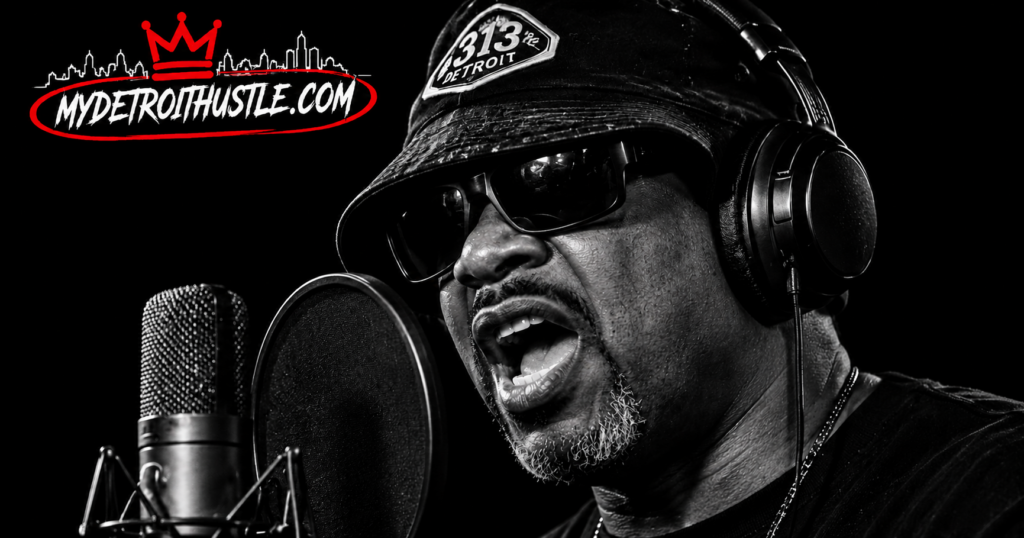
One of the things that makes music special to me is the ability to feel the person who’s making it.
When I hear somebody rapping from New Orleans and I hear that New Orleans drawl, I’m not just hearing words over a beat.
I’m hearing where that person comes from.
I’m hearing personality, culture, and individuality.
I’m feeling that person.
And this isn’t exclusive to hip-hop.
When I listen to Guns N’ Roses and hear Slash playing guitar, I can feel the power and emotion in the music.
That’s what moves me.
Music communicates something beyond the notes, the lyrics, or the technical quality of a recording.
Sometimes it’s the imperfections that make a performance special.
A voice might crack. A rapper might have an unusual delivery. A musician might play something in a way that another person wouldn’t.
Those characteristics can become part of what makes the music memorable.
And that’s what I’ve been missing from the AI-generated performances I’ve heard.
I’ve listened to records where the lyrics made sense, the production was polished, and everything seemed to be technically correct.
I’ve even been impressed by what the technology accomplished.
But I wasn’t moved.
I didn’t feel the personality or the emotion that makes me want to hear a record again.
Now, I want to be very clear about something.
I’m not saying AI will never create music that moves me.
I don’t know that.
Maybe the technology hasn’t reached that point. Maybe the people using it haven’t figured out how to produce the kind of sound I respond to. Maybe somebody will eventually create an AI-generated record that completely changes my perspective.
I don’t know.
All I can tell you is what I’ve experienced so far.
And so far, I haven’t heard an AI-generated vocal performance that makes me feel what I’m looking for.
UNHEARD Asks an Interesting Question
UNHEARD raised a question that deserves consideration.
“If you like the record, why does knowing AI was involved change how you feel about it?”
He described sharing another UNHEARD song with nearly twenty people. According to him, most responded positively at first, but a few became upset after learning AI was involved.
He wanted to understand what changed.
That’s a fair question.
If somebody enjoys a song before knowing how it was created, should learning that AI was involved change their opinion?
I can understand why UNHEARD wants to explore that.
But here’s where my experience differs.
I didn’t enjoy “Top Ten” as a fit for my station before I knew how it was created.
The technology wasn’t what changed my mind.
My musical judgment came first.
And I’m not interested in conducting a popularity contest to determine whether my audience thinks I should have played the record.
That’s not how MyDetroitHustle operates.
However, I do believe listeners should have the opportunity to explore these questions and form their own opinions.
UNHEARD has given permission for “Top Ten” to be shared as part of this editorial discussion, and readers are welcome to listen and decide what they think.
Listen to “Top Ten” by UNHEARD.
Does knowing that a human wrote the lyrics while AI generated the vocal performance change how you experience the song?
That’s a question worth discussing, even if it doesn’t change my decision about radio rotation.
I’m Not Against AI. I Want to Use It Myself.
Here’s something that might surprise people who assume I’m against artificial intelligence.
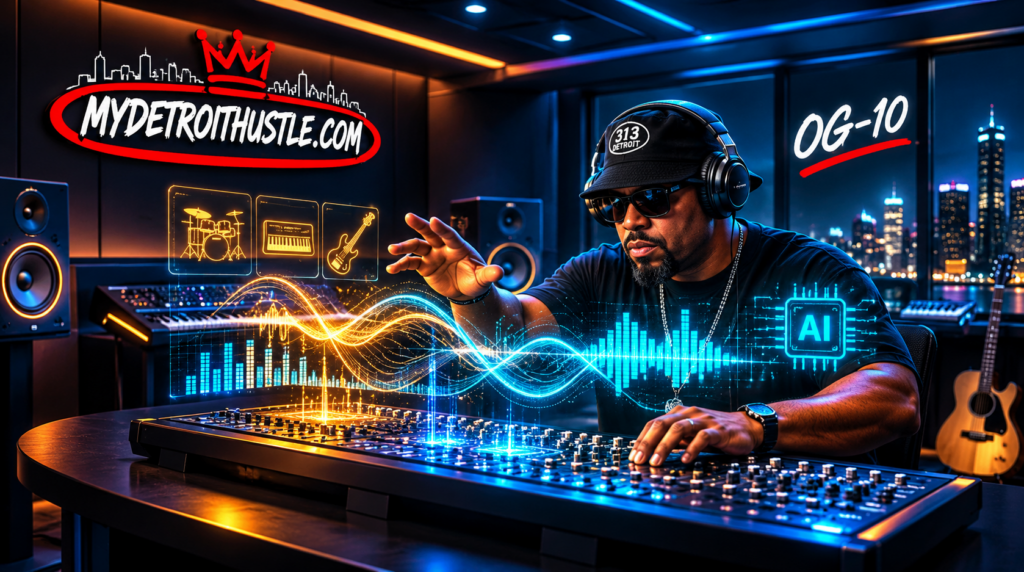
I’m excited about what AI could allow me to do as a musician.
I’ve been making music for decades, and one of my biggest creative limitations has always been getting access to the sounds I hear in my head.
I’m a recording artist and producer, but I’ve never considered myself a professional recording engineer.
I have a trusted engineer-producer friend who has helped me throughout my musical journey.
He understands that I have the creative ideas, the delivery, and the musical vision, even if I don’t always understand every technical detail of recording and engineering.
He’s helped me learn enough to create and record my own music so that he can take those recordings and work his magic.
And he’s also introduced me to possibilities involving AI-assisted production.
Over the years, technology has already changed what I can do creatively.
I have recording equipment from years ago that I’ve been pulling back out. I’ve made beats and recorded music on my iPad, and I believe some of that music is better than what I created in the past simply because I have access to so many more sounds.
Now imagine being able to describe a sound you hear in your imagination and have technology help you create it.
Maybe I want a drum sound with the character and groove of Clyde Stubblefield playing behind James Brown.
Instead of digging through hundreds of records trying to find the right sample, what if I could describe what I’m imagining and generate a sound that captures those qualities?
Then I could chop it, filter it, rearrange it, and build something original around it.
That’s exciting to me.
Because now the limitations aren’t necessarily the equipment I own or the sounds I can find.
The possibilities become much more connected to my imagination.
And I can’t wait to experiment with that.
AI as a Tool Versus AI as the Performer
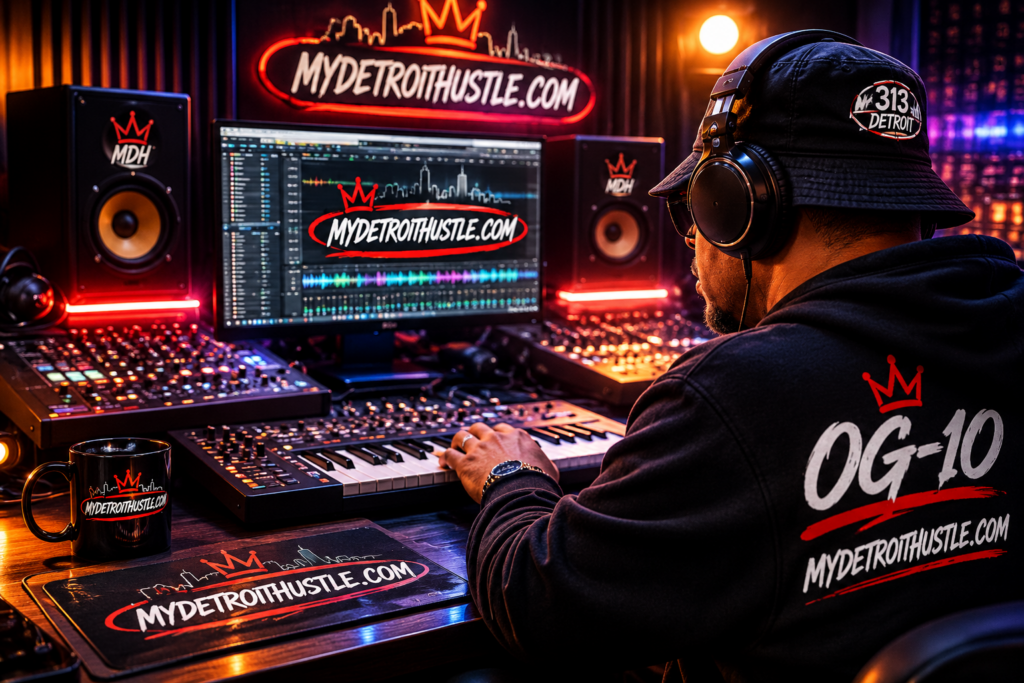
I’ve heard music created by my engineer-producer friend that incorporates AI-generated sounds into the production.
He might generate a bass line, a snare, a guitar sound, or another musical element.
Then he works with those sounds the same way hip-hop producers have worked with samples for decades.
He manipulates them, combines them with other elements, and creates something that reflects his musical vision.
And I’ve heard him combine those sounds with human vocal performances from established rappers.
Some of those records are incredible.
I felt them.
I enjoyed them.
And the fact that AI helped generate some of the instrumental elements didn’t change that.
That’s why I believe there’s an important distinction between using AI as a creative tool and using it to generate a complete musical performance.
I’m not saying one approach is automatically legitimate and the other isn’t.
I’m saying that, based on my listening experiences, I’ve connected with one approach in ways I haven’t connected with the other.
I also recognize that AI can serve different purposes.
I’ve heard commercial jingles that I suspect were AI-generated and thought they were catchy and effective.
If I were creating a commercial for one of my own products, I might consider using AI to help produce a jingle if I could get the sound I wanted.
I’ve also followed discussions about established producers experimenting with virtual performers, AI-assisted vocals, and other technologies.
I’m interested in seeing where all of that leads.
I’m not interested in being the guy who rejects technology because he doesn’t understand it.
I’m learning about AI, studying its possibilities, and looking forward to incorporating it into my own work.
But being excited about AI doesn’t mean I have to like every piece of music created with it.
What About the Independent Artists Who Depend on Music for a Living?
There’s another side to this conversation that deserves attention.
Independent musicians are already competing for limited opportunities.
They’re paying for studio time, working with producers and engineers, developing their performances, booking shows, promoting their records, and trying to build audiences.
Now AI introduces another possibility: music can be produced without hiring some of the people who traditionally participated in making it.
UNHEARD acknowledged that concern in his response.
He pointed out that technology capable of saving an artist time or money could also mean lost work for a musician or singer.
As he explained:
“A shortcut for someone finishing a record can mean a missed session for a singer.”
That’s an important point.
I’m not suggesting that every use of AI eliminates a job or that musicians should refuse to adopt new tools.
Technology has been changing music production for generations.
Sampling, drum machines, digital recording, software instruments, and home studios all changed how records were made.
AI is another major development, and it’s reasonable to expect that it will create opportunities while also disrupting existing ones.
The question is how we use it responsibly.
UNHEARD also emphasized the importance of transparency about who wrote, produced, and performed a recording.
I agree with that.
Listeners and music professionals should have access to accurate information about how records were created, especially as the distinctions between human and AI-generated performances become more complicated.
So Where Does MyDetroitHustle Stand?
For now, MyDetroitHustle Radio is not adding music with AI-generated lead vocal performances to our regular rotation.
That is our current editorial policy.
We do consider music that uses AI as a production tool, particularly when it incorporates human performances and fits the sound and mission of the station.
But AI assistance doesn’t guarantee placement any more than traditional recording does.
Every record is still subject to editorial consideration.
And that isn’t changing.
MyDetroitHustle exists to support independent, underground, and unsigned hip-hop artists and introduce our audience to music we believe deserves attention.
That includes traditional hip-hop, Detroit street music, commercially oriented independent hip-hop, and other sounds that fit our musical identity.
We’re not trying to be everything to everybody.
We’re building a platform around a particular perspective.
And that perspective comes from decades of listening to, creating, performing, and living hip-hop music.
Could my position on AI-generated performances change someday?
Absolutely.
If somebody eventually makes an AI-generated record that moves me, I’ll acknowledge it.
That doesn’t automatically mean I’ll add it to rotation. The station’s editorial policy is a separate consideration.
But I’m willing to listen, learn, and reconsider my opinions as the technology develops.
What I’m not willing to do is abandon my musical judgment simply because something is technologically impressive or because other people believe I should embrace it.
The Conversation Is Just Beginning
I appreciate UNHEARD taking the time to explain the creative process behind “Top Ten” and participate in this discussion.
We don’t have to agree about everything to have a productive conversation.
He believes his songwriting and creative direction deserve recognition, even though AI generates the vocal performance.
I recognize the human creative decisions involved, but the resulting record still has to connect with me musically.
And in this particular case, it didn’t.
That doesn’t mean the conversation ends here.
As AI continues to develop, we’re going to face new questions about songwriting, production, performance, ownership, creativity, and what it means to be a recording artist.
I don’t pretend to have all the answers.
But I do believe these conversations should include the independent artists, producers, DJs, engineers, and listeners who will be affected by the changes.
And I believe we should be willing to hear different perspectives without abandoning our own standards.
Because at the end of the day, technology can give us incredible tools.
It can generate instruments, create arrangements, and even produce convincing vocal performances.
But for me, the question remains:
AI can make the music. But can you feel it?
That’s what I’m waiting to hear.
— OG-10
MyDetroitHustle.com
⸻
Join the Discussion
We want to hear from you.
- Have you heard AI-generated music that genuinely moved you emotionally?
- Should human-written songs with AI-generated vocals be treated differently from completely AI-generated compositions?
- Does knowing how a song was created change whether you enjoy it?
- Should independent hip-hop radio stations include virtual AI performers in their rotations?
- Where do you draw the line between AI as a creative tool and AI as a replacement for human musicians?
Share your thoughts in the comments and join the conversation.
Featured contributor: UNHEARD, a virtual AI rap project from Inner Directed.

Listen to “Top Ten” by UNHEARD
Follow UNHEARD: @thisisunheard
Discover independent hip-hop, artist features, interviews, and more at MyDetroitHustle.com.
MyDetroitHustle — Dedicated to Helping Young People Win.
 Uncategorized